
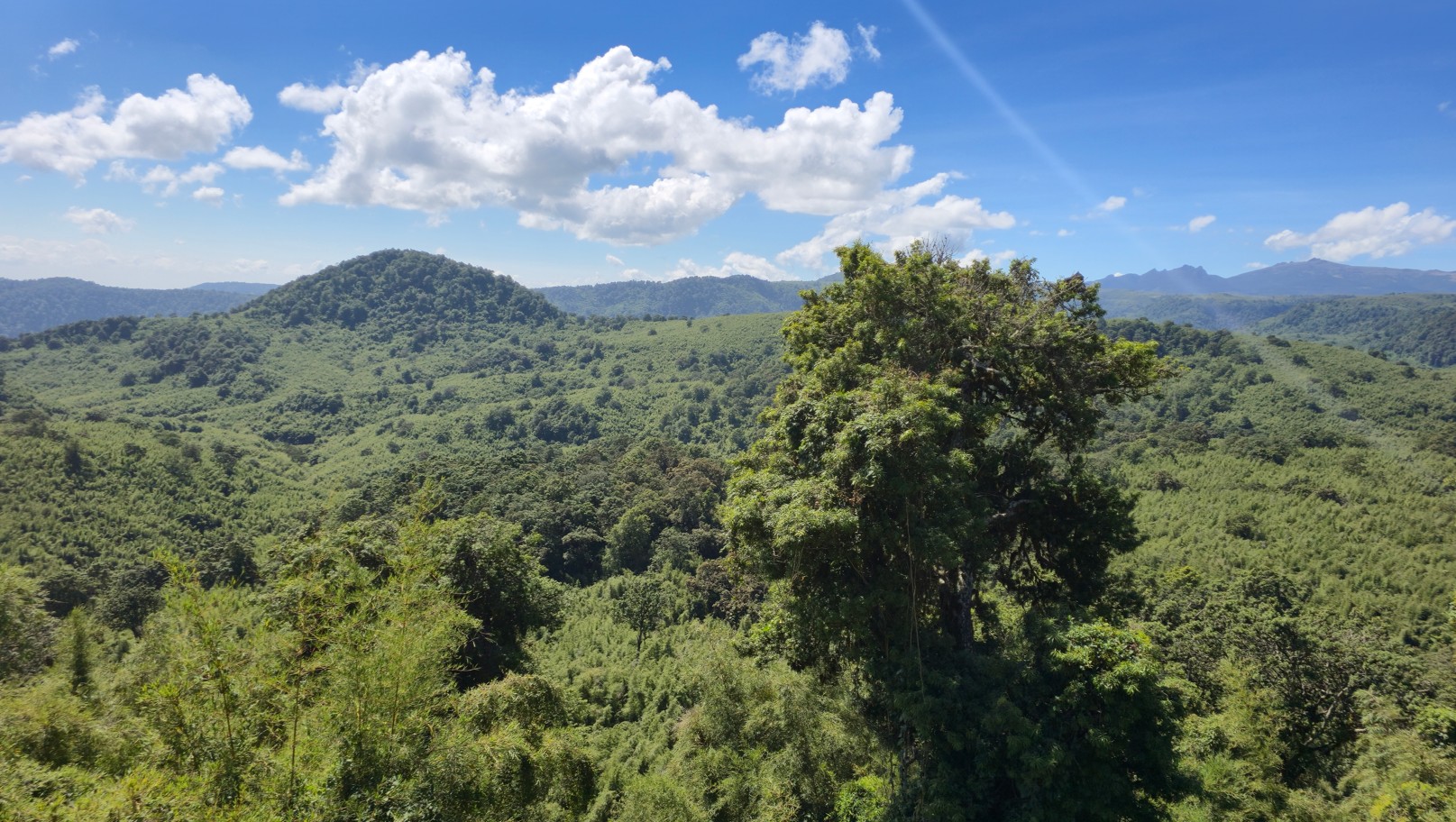
It’s Sunday, January 18th, 2026, the kind of day that feels custom-ordered from the universe. The sun is up, and the sky is clear, the perfect recipe for a weekend road trip. You see, Aberdare National Park and the Rift Valley Viewpoints have been sitting pretty on my bucket list for what feels like forever, and today, I’m finally checking them off.
Now, I’ll admit: I was a bit wary about the road to the park. The evening before, the mountains had been engulfed in one of those dramatic rainstorms that look like someone is pouring milk over the hills, thunder clapping like sonic booms from an F-16. But surprise, surprise! But it turns out the surface had dried out quickly. Plus, the road is in great shape; I’m talking steady ballast, concrete stretches, and sections of tarmac winding through the green.
The drive itself? Chef’s kiss. It was the perfect mix of nature’s untamed beauty, bendy little roads that make your heart do happy flips, and just enough “ooooh!” moments to keep it exciting. About the adventure, it delivered big time. I’d rate it 10/10, on par with the hidden gems of West Pokot.
I’ve poured every bit of this adventure into the recap below. And even if you’re here to swoon over Aberdare National Park photos (and yes, I have plenty!), there’s still a sprinkle of magic in here just for you.
The Kick-Off: Departing from Nyeri

The wheels started rolling at exactly 9:15 a.m. from Nyeri town, with the Sunday morning sun casting that perfect golden glow. We passed through familiar spots, including Outspan Hotel, Westwood Hotel, Nyeri Golf Club, and Outspan Hospital.

Pat Kamakwa and Kigogoini, it wasn’t long before we cruised by Nyayuini, a charming little lodge perched right on the edge of the Kiandongoro Forest. From there, the view opens up like a secret: panoramic scenes of Nyeri town and the lush lands that stretch far beyond.
This early stretch is pleasant, calm, and filled with the promise of something exciting just up the road. The anticipation was real, and with each kilometer, we were inching closer to the gates of Aberdare.
Entering Aberdare
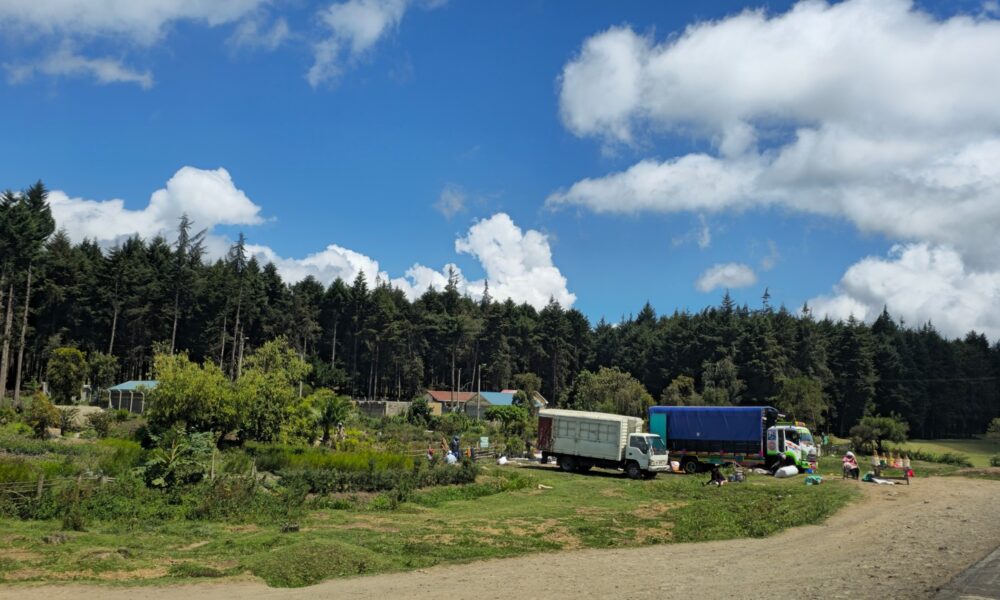
The official entry into Aberdare National Park on this route is through the Kiandongoro Gate, but truthfully, the adventure starts well before you get there. The road gently winds through stretches of planted cypress forest, passing a lightly manned gate before venturing into the denser, indigenous patches of hardwood species like camphor and East African olive. Suddenly, the scenery shifts; the air feels cooler, the trees get taller, and you know you’ve crossed into nature’s territory.


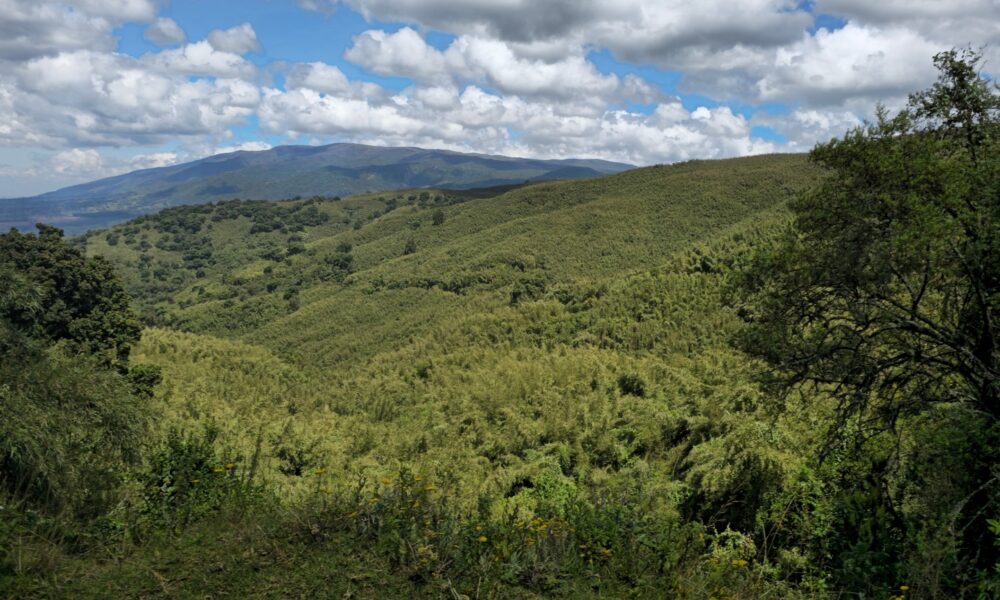
As we drove deeper, the bamboo forest belt took over….tall, graceful, and absolutely breathtaking. There’s a peaceful kind of quiet here, occasionally interrupted by distant bird calls or the rustle of leaves. And in case you didn’t know, bamboo provides food and shelter for some of Aberdare’s most iconic residents: buffalo, elephants, and the elusive mountain bongo. So while it may look peaceful on the surface, a whole secret world is thriving within those towering stalks.
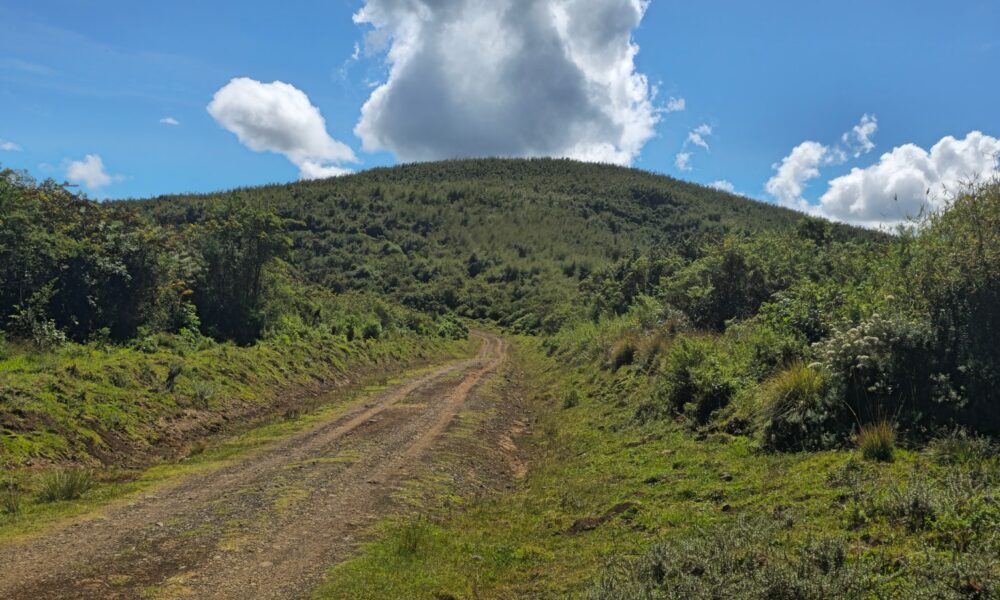
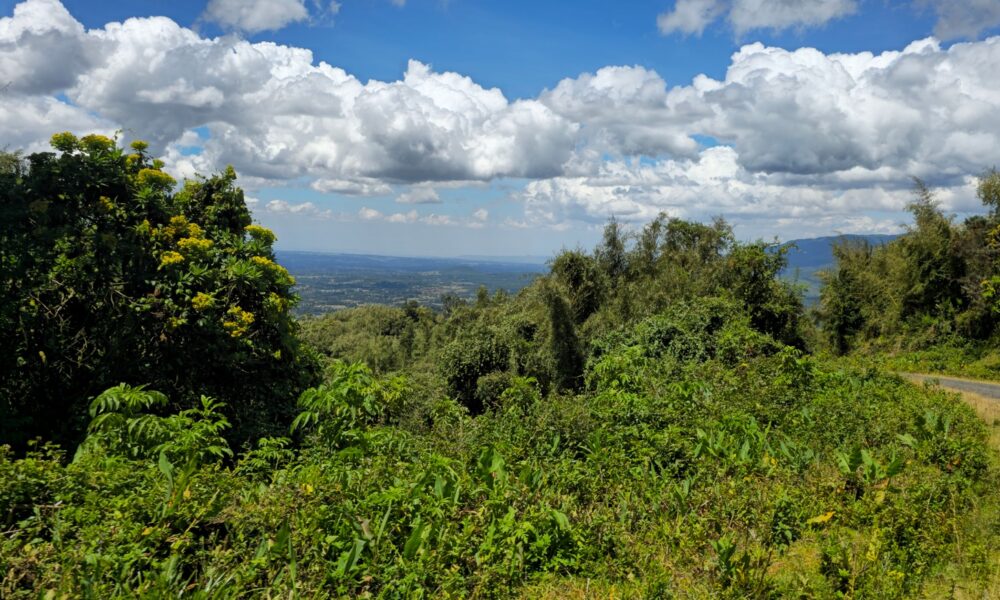
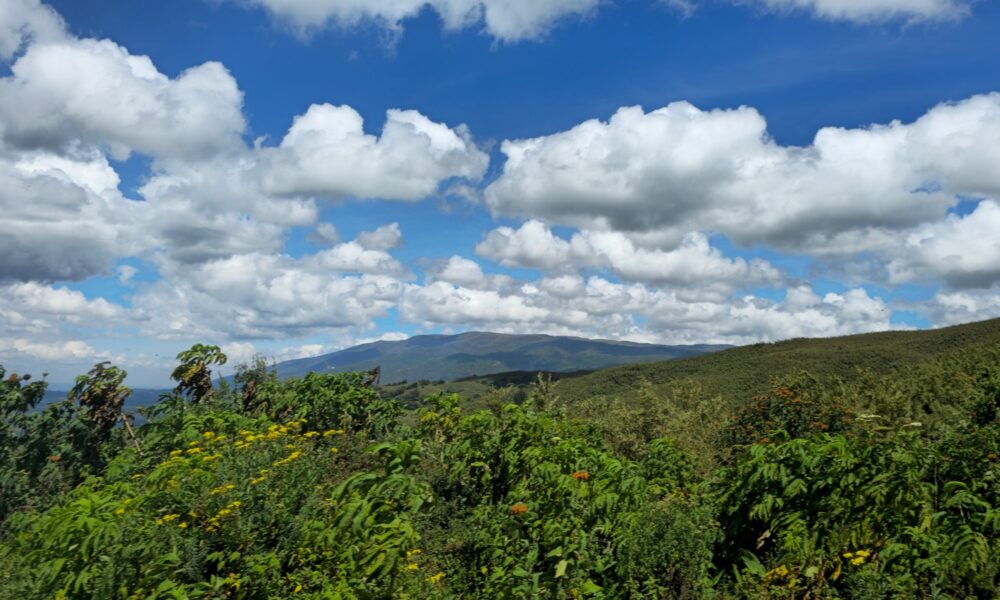
We paused a few times to take it all in, including the Aberdare mountains rising in the distance, forested valleys stretching in every direction, and a quiet that felt ancient. But it wasn’t just the scenery that held our attention. Fresh tracks and piles of dung scattered across the road whispered of elephants and buffalo, but they stayed out of sight. Not that we minded, but the thrill was in knowing they were close.
At one point, we spotted what looked like a hidden pond or maybe a watering hole, sitting just off the road. A few meters away from it was a bamboo-covered hill so striking that we couldn’t resist pulling over to soak it in properly. The only hiccup? No network. Not even a single bar. So if you’re planning to visit, know you’ll be entering a zone of pure digital silence.

The Gate with a Story: Kiandongoro Stopover
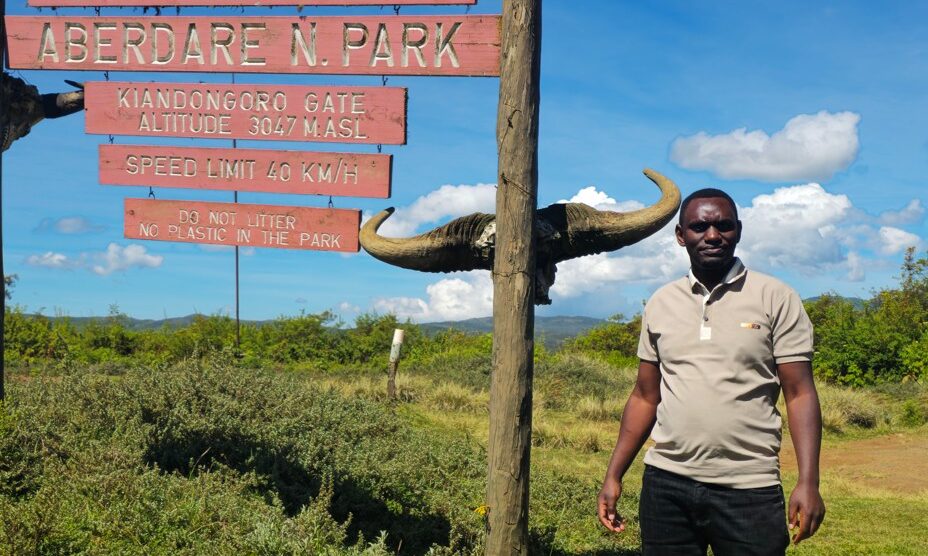
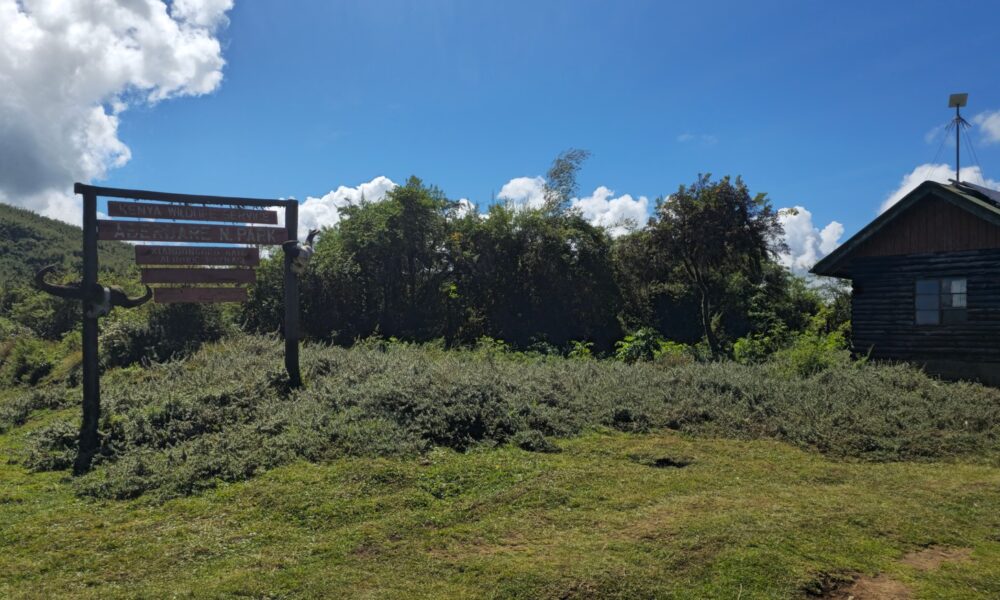
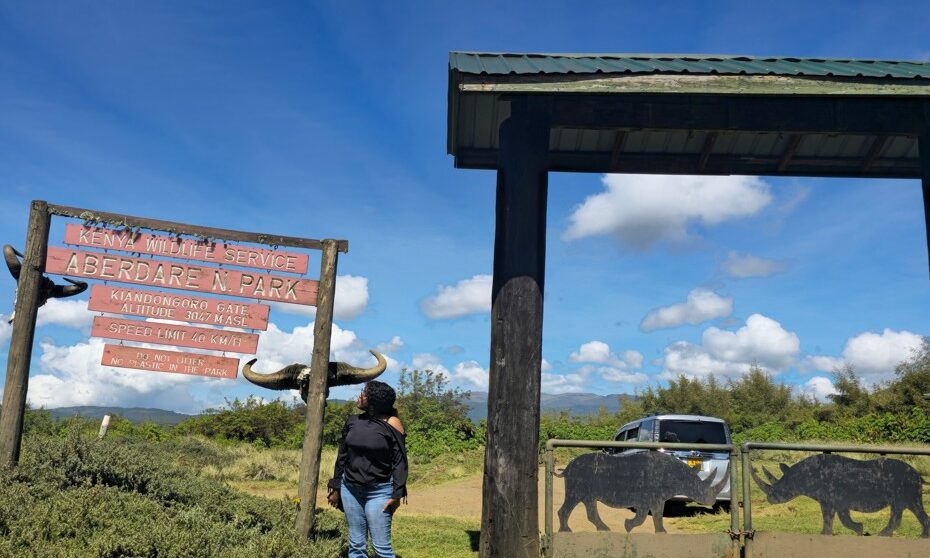
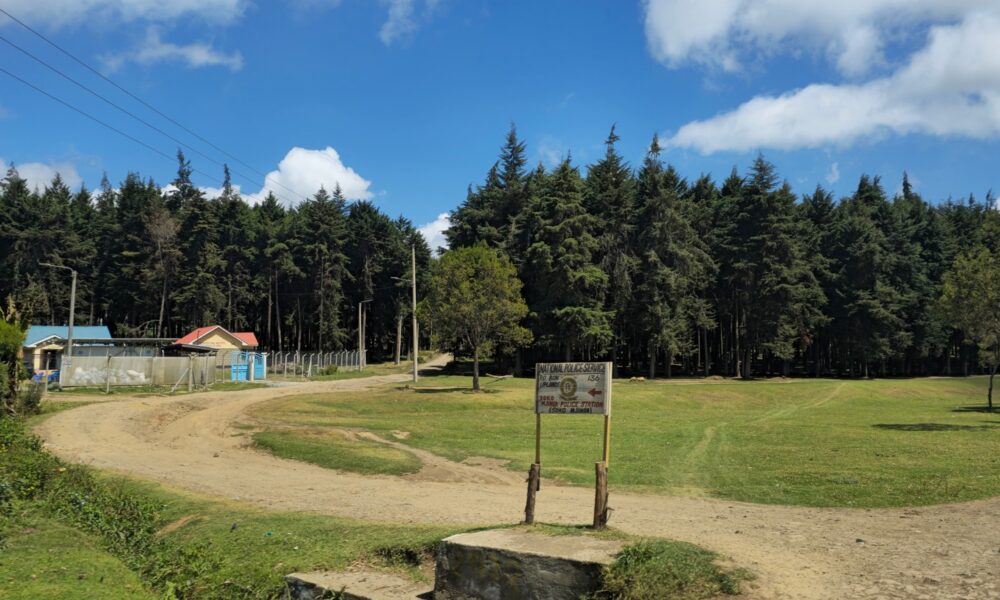
We finally rolled up to the Kiandongoro Gate. Here, you’re greeted by friendly guides, a signboard… and a buffalo skull mounted proudly out front, cool and slightly ominous. Naturally, we had to stop for quick photos.
This is the spot where you’re supposed to pay the park entry fees. Simple enough, right? Well… not quite. Trouble is, there was no network, a classic Aberdare problem. So, we ended up driving with one of the guides up a nearby hill, on a mini side mission to find reception.
Once we got the charges sorted, the total came to Ksh 1,500 for the 7-seater vehicle and Ksh 2,400 for the three adults. For those curious about the breakdown or planning a visit, feel free to check out the updated Aberdare National Park entry fees.


Rolling Moorland and Mossy Trails
Beyond the Kiandongoro gate, the road opens up into open moorland and alpine heath, with sweeping views of distant mountain ranges. A few meters off the path, five elands were grazing on tussock grass unbothered, majestic, and perfectly at home.
As we continued, the landscape shifted once more. The grasslands gave way to a quiet patch of forest, where the trees stood shorter, their trunks and canopies draped in light green moss. Overhead, the sunlight filtered softly through the canopy, casting golden highlights that contrasted beautifully with the deep, dappled shadows below.
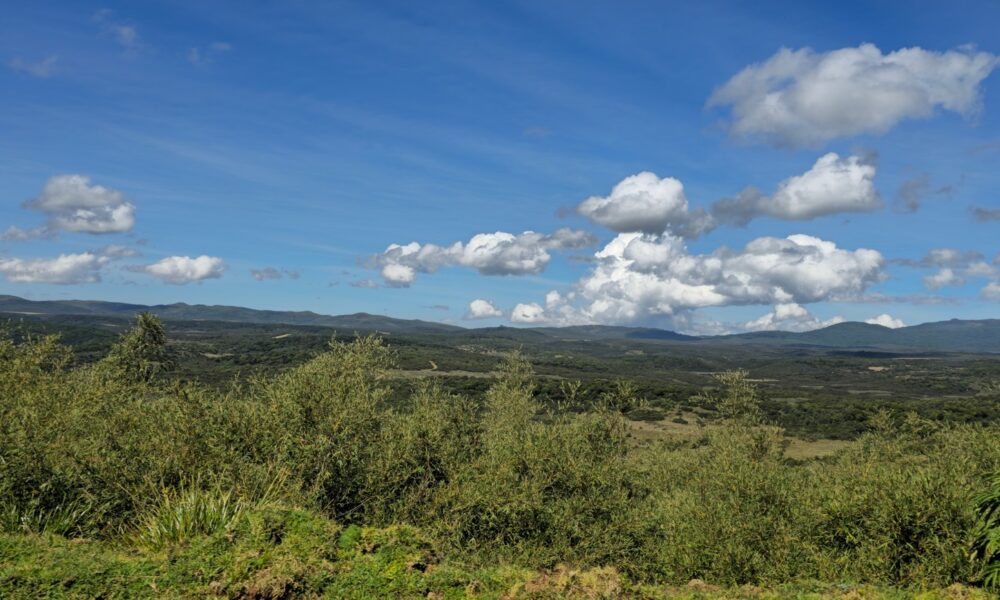
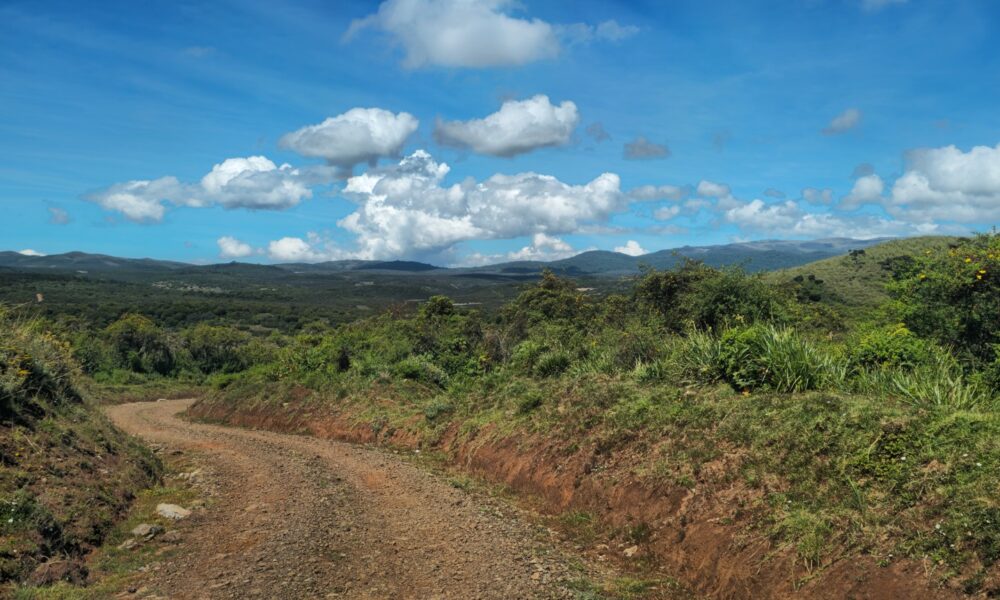
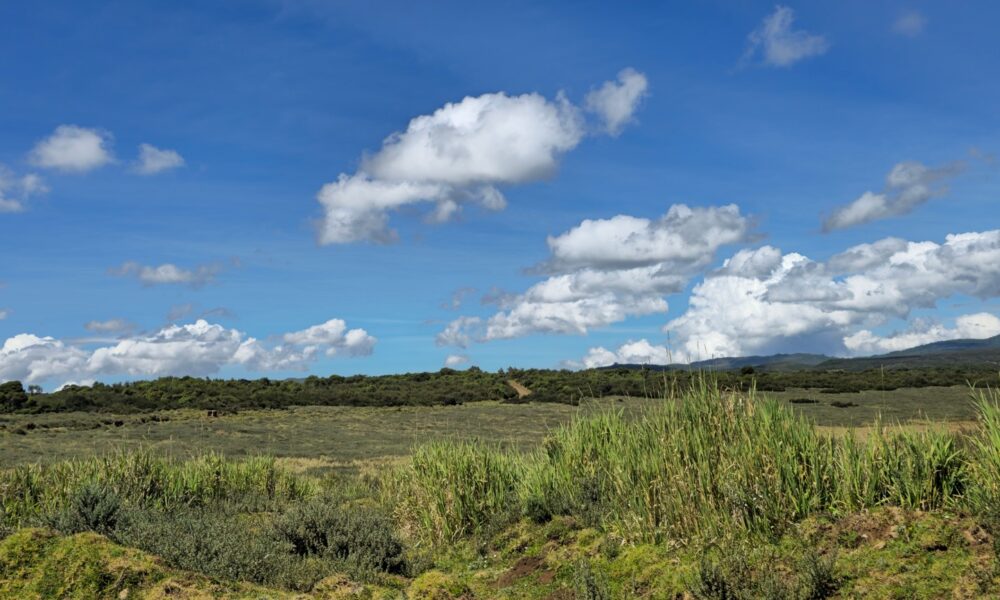
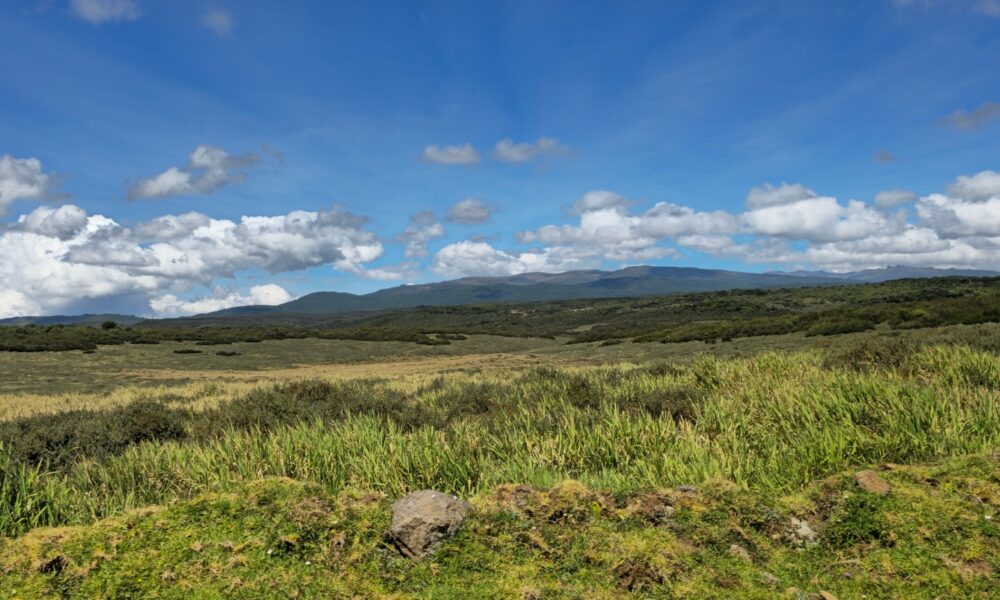
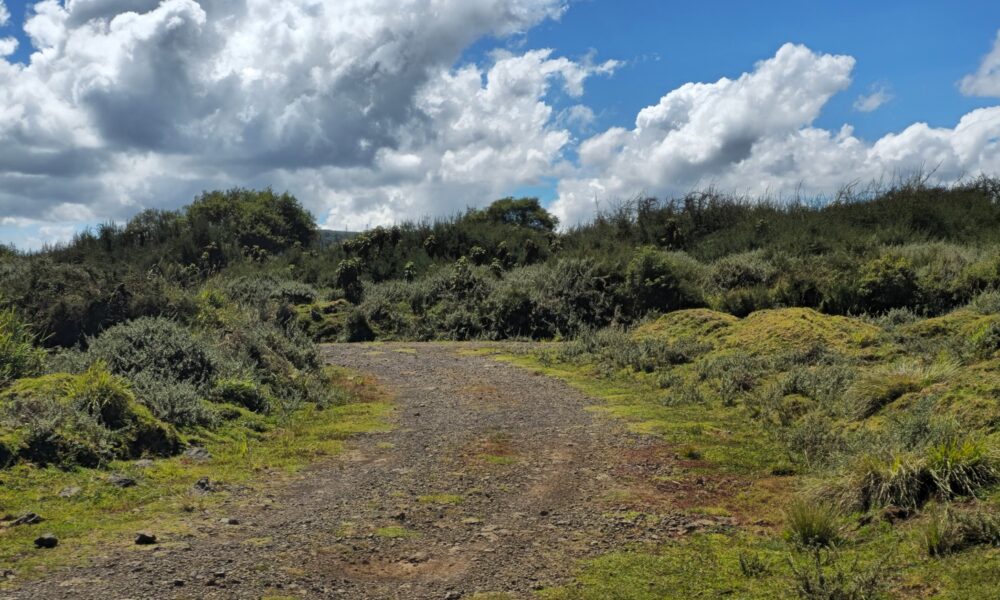
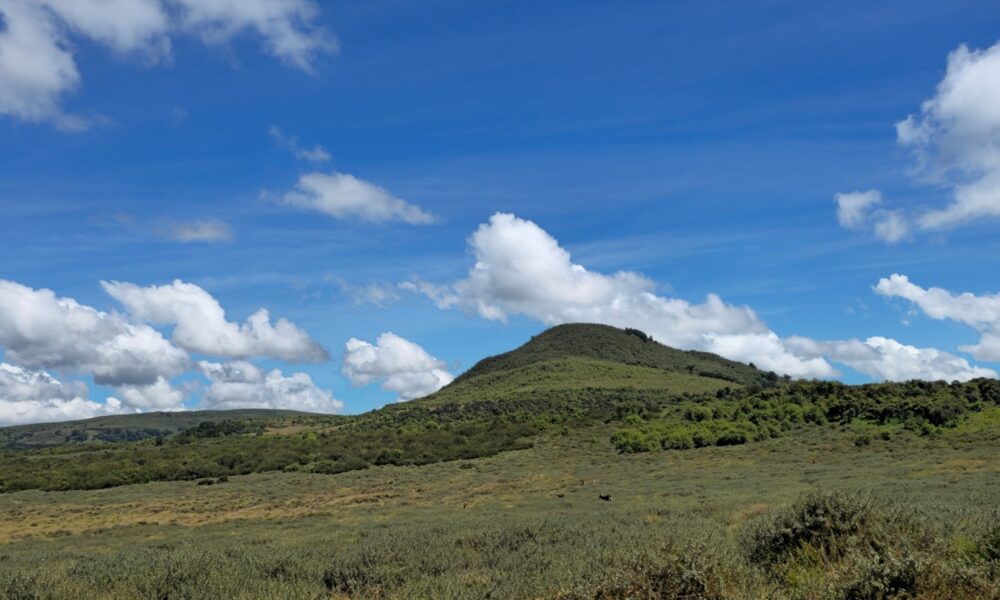
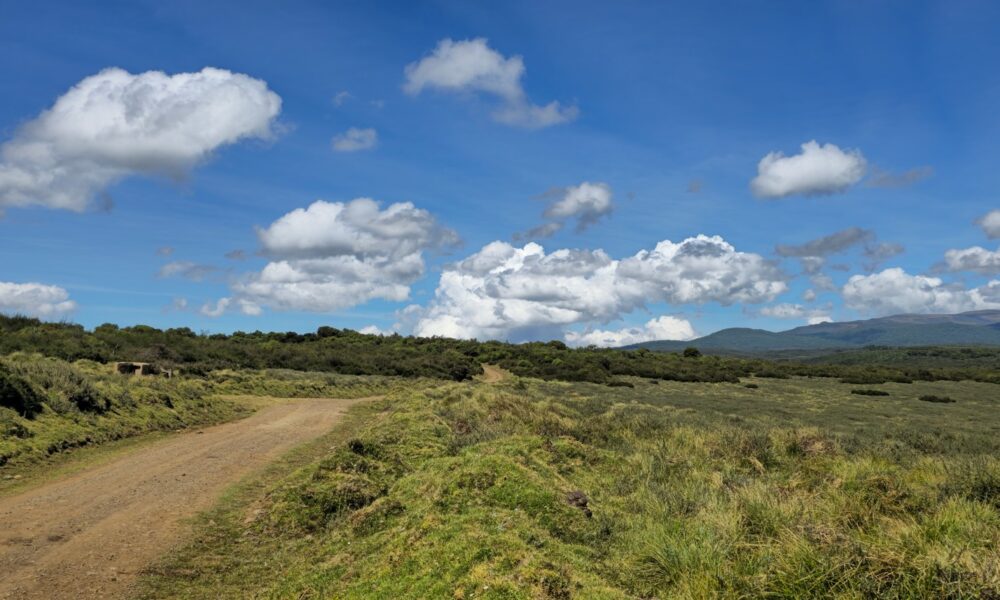
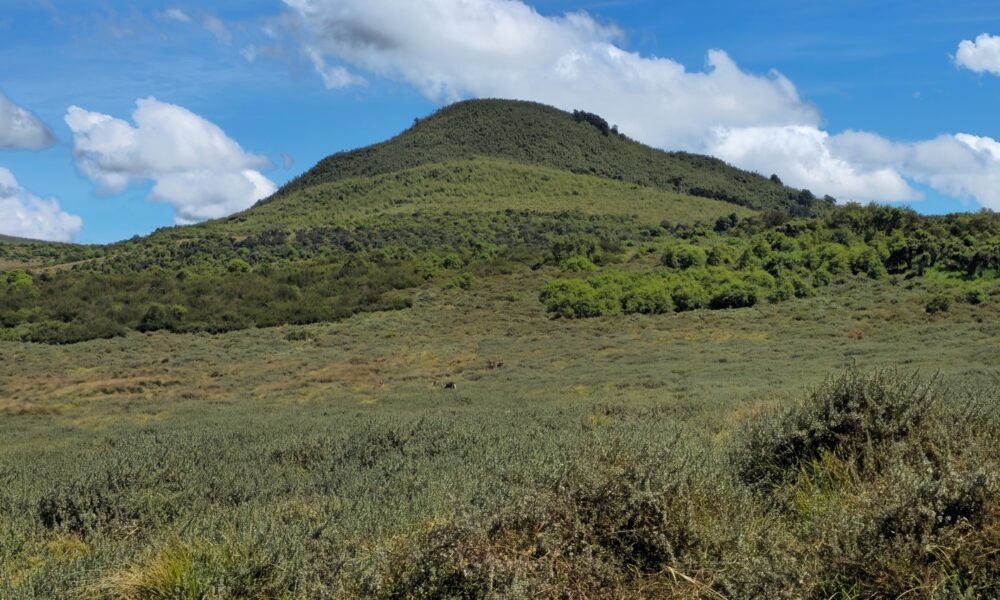
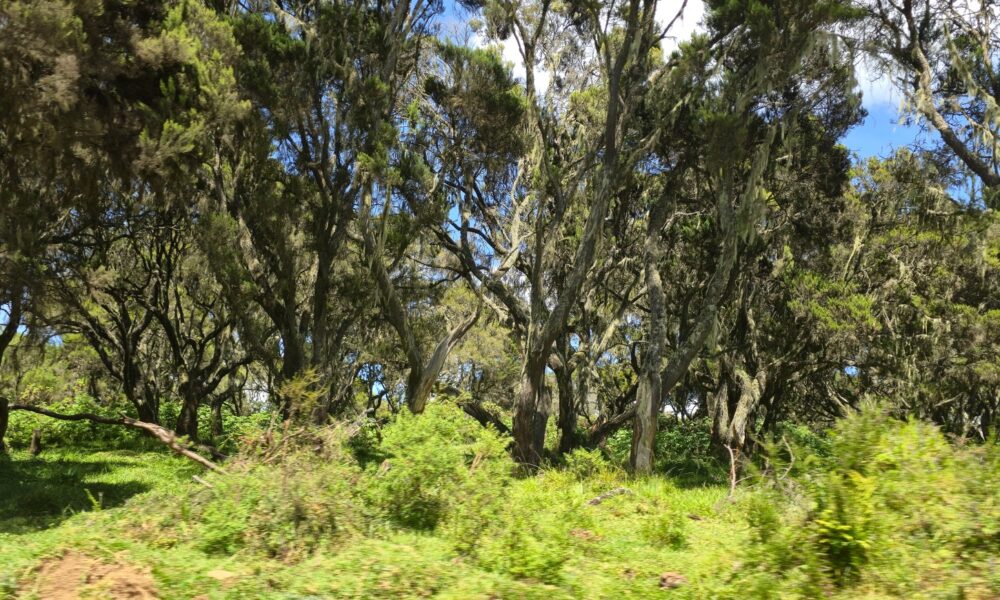
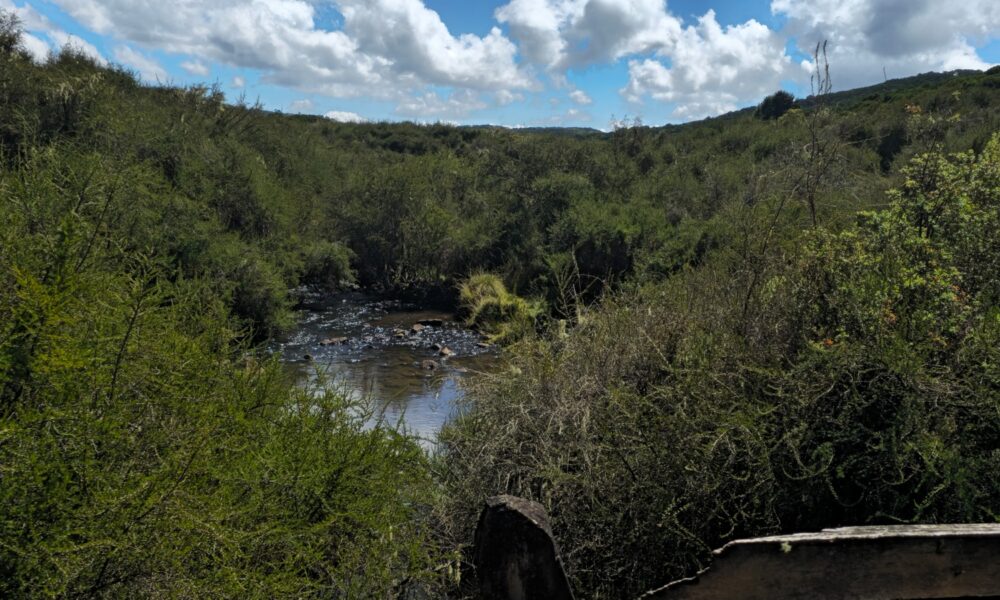
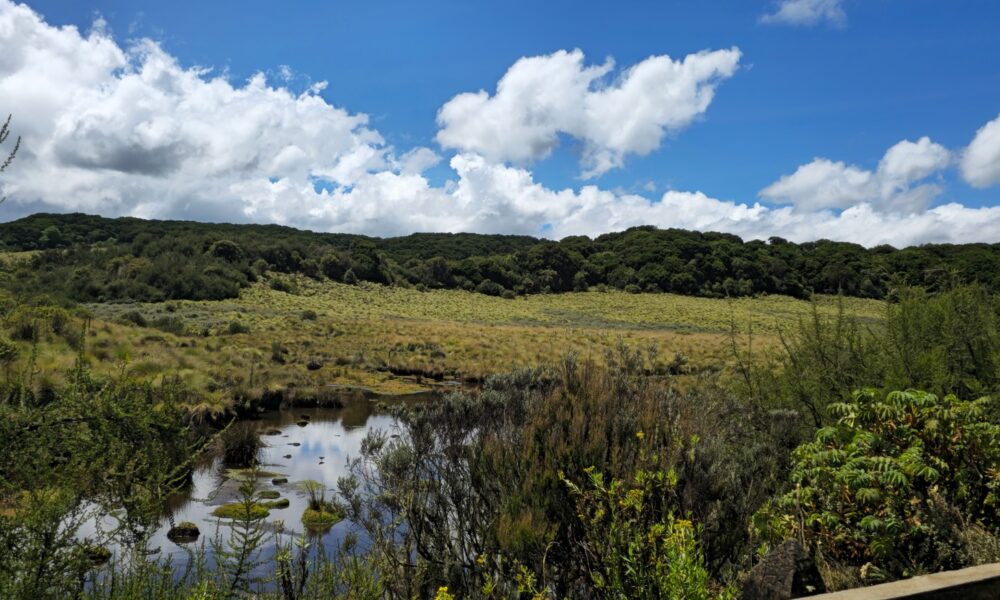
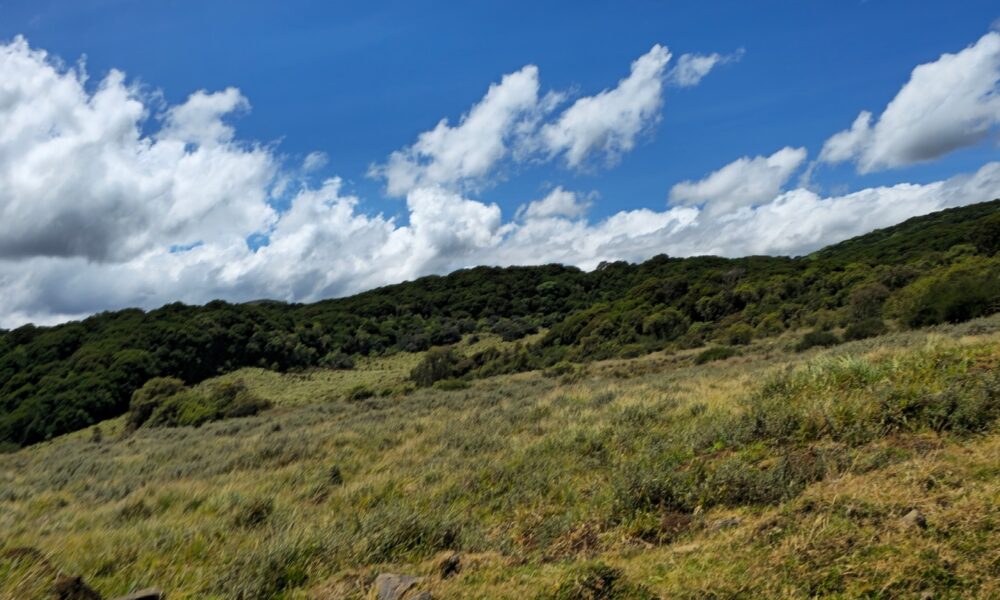
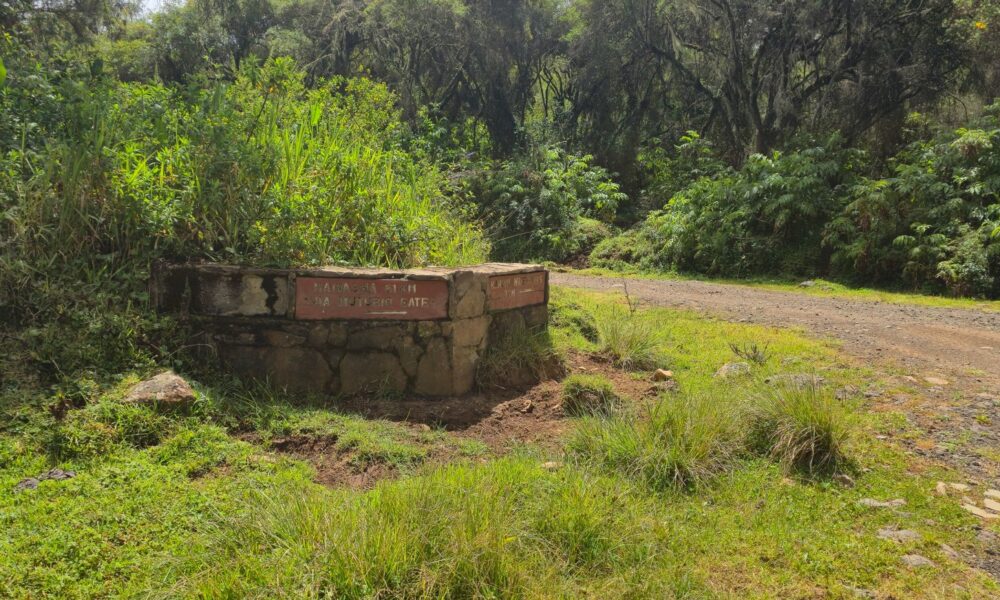
What I loved most was how calm and undisturbed everything felt. We also spotted neat cement plaques pointing the way to nearby gems like Karuru Falls, Queen’s Cave, Magura Waterfalls, Fishing Lodge, and Chania Waterfall. Each one hints at a whole new chapter of adventure waiting just off the path.

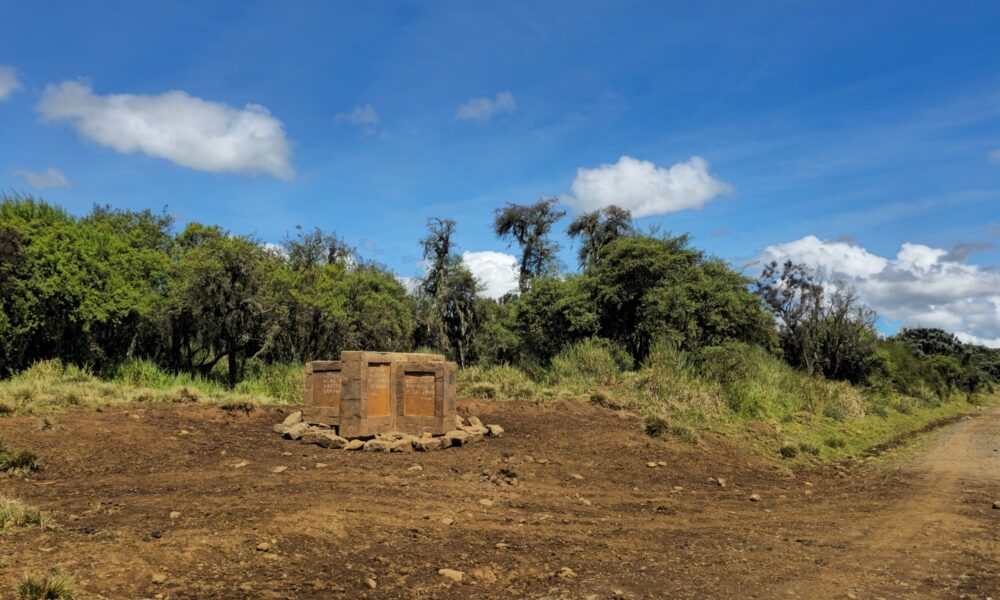
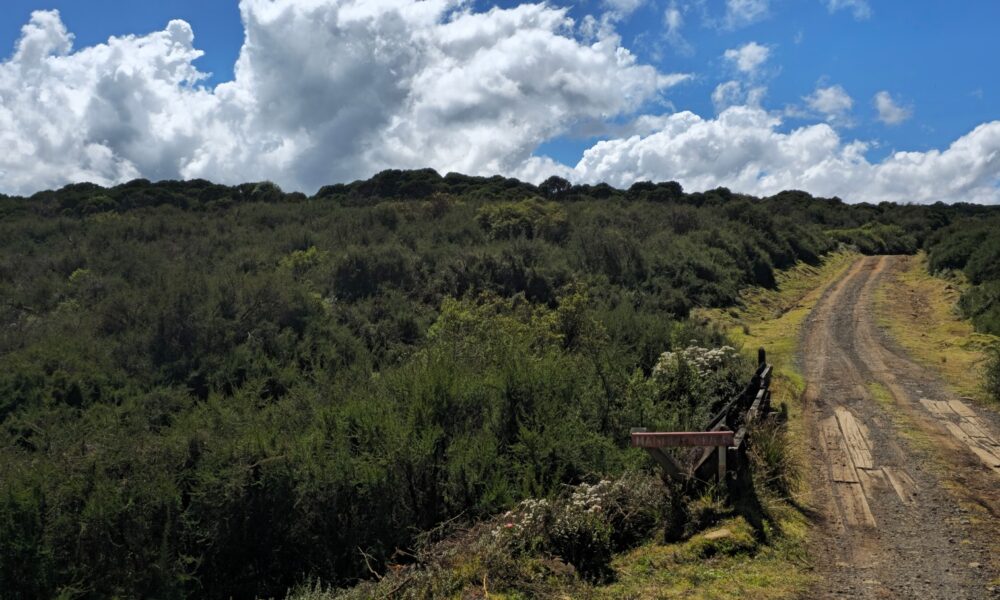
You’ll cross over a few wooden bridges along this path, all solid under the tires and clearly well cared for. Beneath each, a crystal-clear stream flowed so clean and sparkling they looked like something out of a postcard.
In the distance, a waterfall peeked through the trees. I didn’t catch its name, but it added to the serene, mystical vibe of the park.

Mutubio Gate: Farewell to the Park
Eventually, we arrived at Mutubio Gate, and it was time to officially check out of Aberdare National Park. Here’s the drill: you’re expected to hand in the Aberdare National Park ticket you received at Kiandongoro Gate for record-keeping purposes.
But if you’re the sentimental type (and honestly, who isn’t after a trip like this?) and want to keep it as a little memento, you have two options. You can either snap a photo of the ticket and submit it, or record your details at the gate office and take the original with you. Simple as that.

The moment you exit the gate, the landscape opens up in a way that feels almost cinematic. The road begins to wind downhill, flanked by towering bamboo and thick, forested hills that stretch as far as the eye can see.
Somewhere in the distance, I’m pretty sure I spotted Mount Kipipiri, a massive, majestic bump on the horizon. The scenery here is wild and untamed, the kind of views that stick with you long after the trip is over.

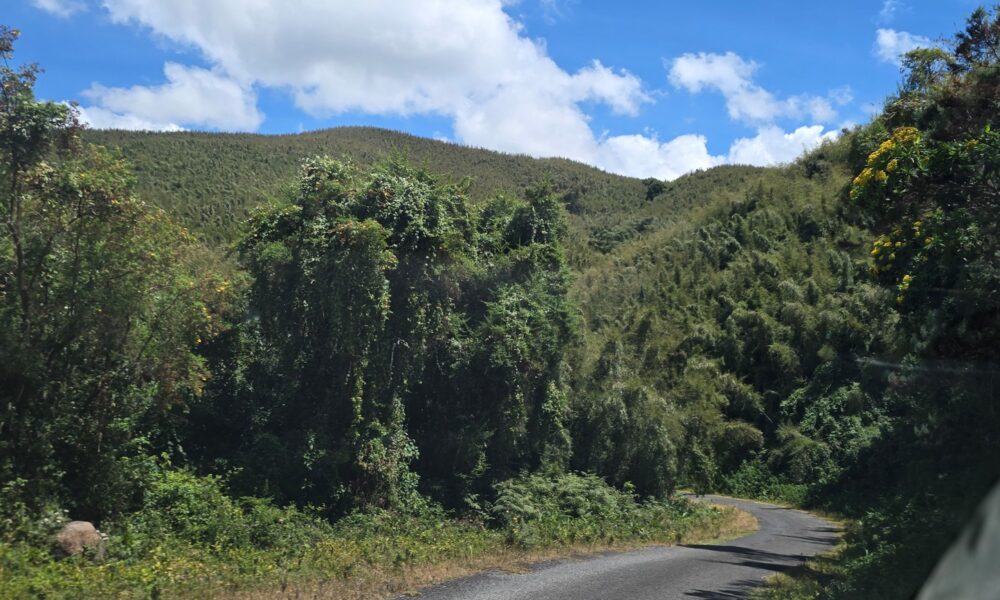
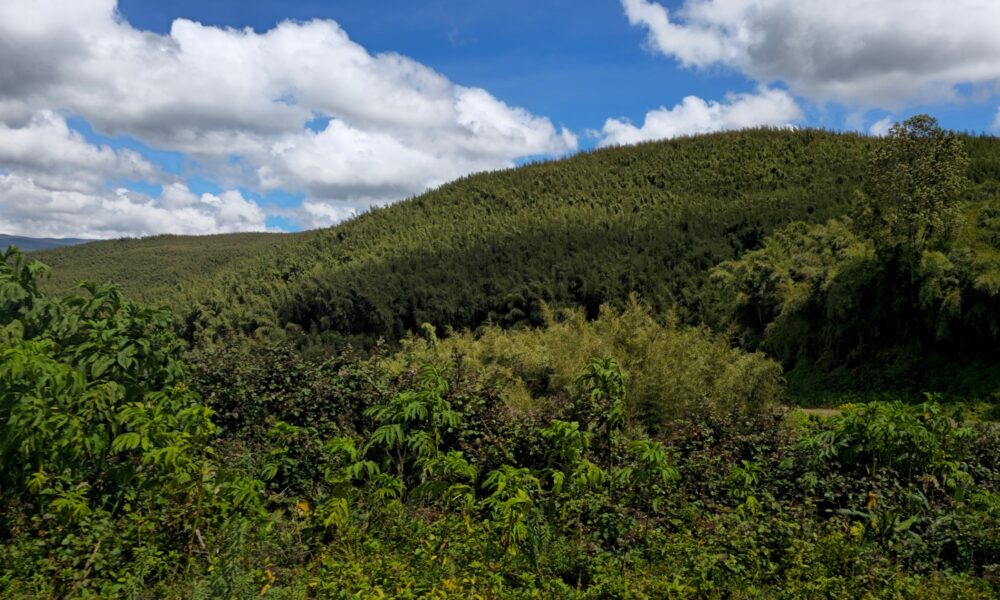
Oh, and before I forget, there’s a blessed stretch of tarmac starting just a few meters from the gate toward Kahuruko. After the bumpy forest roads, it feels like a sweet little reward for your tires (and your spine. But don’t celebrate too soon… because just when you start to get comfy, the smooth ride disappears, and you’re back to bouncing.
The Bumpy Stretch to Ndunyu Njeru
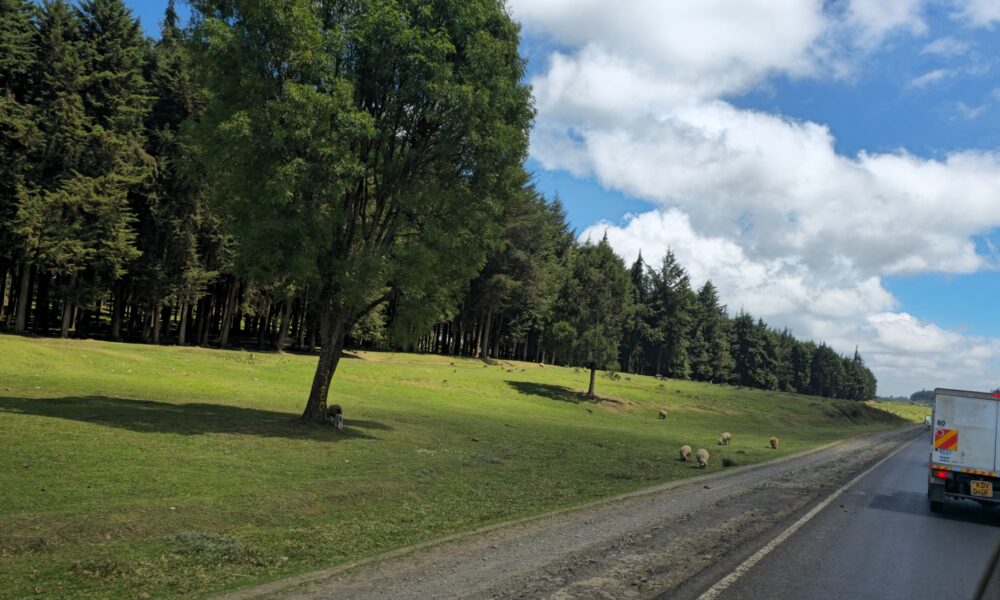
Once we left the boundaries of the national park, the vegetation shifted again. We passed through yet another stretch of planted cedar trees, with signs of active harvesting: clearly marked logs bundled along the road.


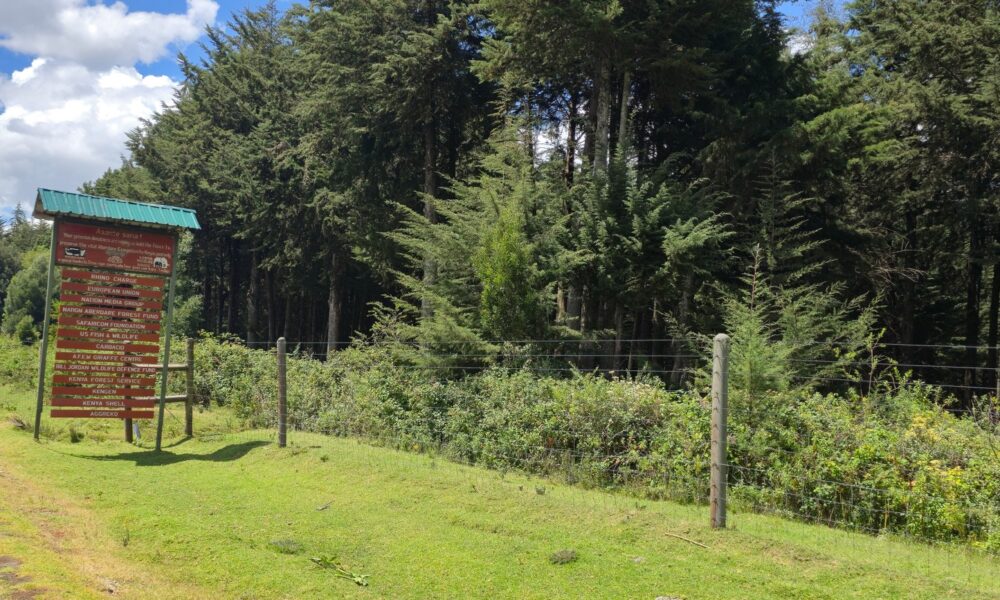


And then, reality hit: the road from Kahuruko to Ndunyu Njeru town turns pretty rough. We’re talking legit potholes, deep enough to make you slow to a crawl. Motorists have already taken to the sides, and I blame trucks hurling logs from the cedar forest. I couldn’t help but wonder how locals manage when it rains, and if you’ve ever seen viral photos of Nyandarua roads turned into muddy obstacle courses, this is that kind of place.
That said, there’s light at the end of the bumpy tunnel. Construction is underway, and there’s hope that this rugged stretch will be tamed soon. Fingers crossed that the upgrades come through before the next rainy season decides to test everyone’s patience and suspension systems.
On the positive side, you still enjoy a closer view of the Aberdare ranges and greenery from this road. Oh, you’ll find Kipipiri Farm Campsite along this route.


Smooth Cruising: Njabini to Kinamba
The drive from Ndunyu Njeru to Engineer didn’t offer much in the way of surprises, but it was a necessary link in the journey. At Engineer, we veered left onto the road that leads toward Njabini, a stretch that brought back memories from my Nyeri-to-Naivasha road trip. If you haven’t read that one, you should; it offers a detailed look at this scenic route from a different perspective.
Just like during that 31/12/2024 trip, this road gave us those unbeatable, up-close views of the Kinangop peak. And had we taken the opposite route toward Ol Kalou, we’d have been treated to Table Mountain showing off near the Wanjohi Valley.

This time around, Elephant Hill was playing shy, partially hidden beneath a thick blanket of clouds and only letting its outline peek through now and then. Beside it stands Mount Satima, the highest peak in the Aberdares.

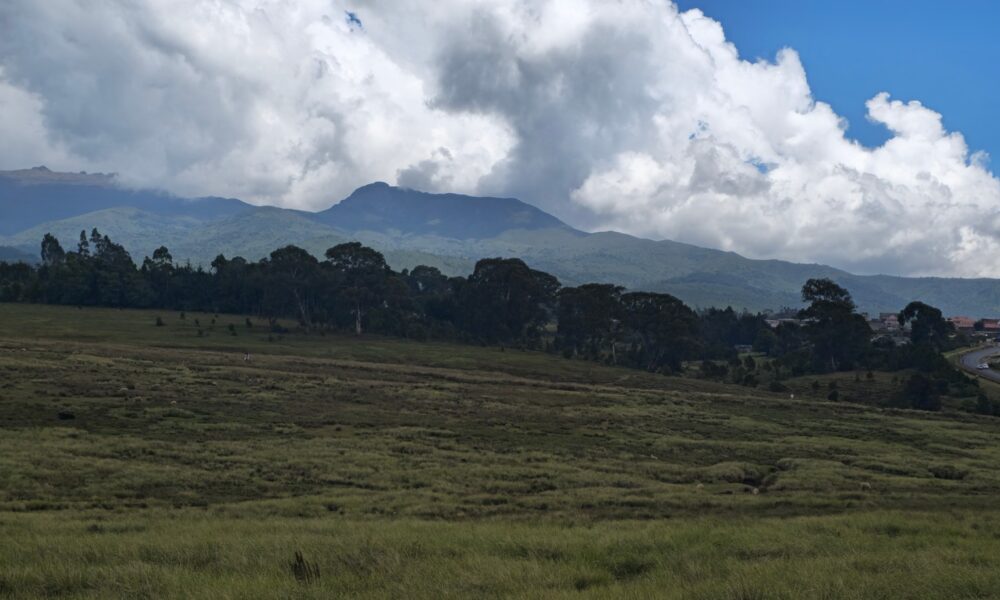
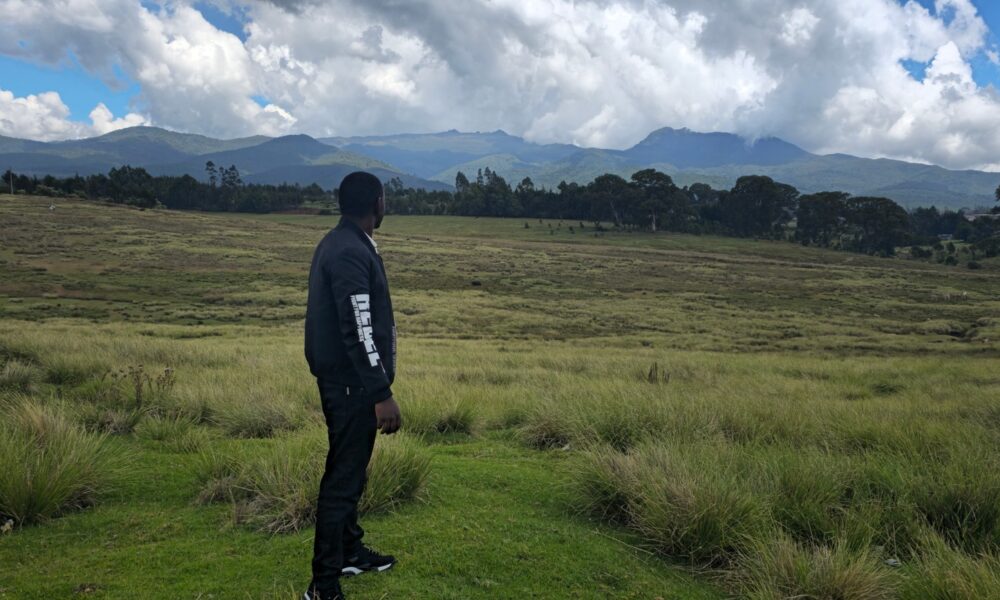
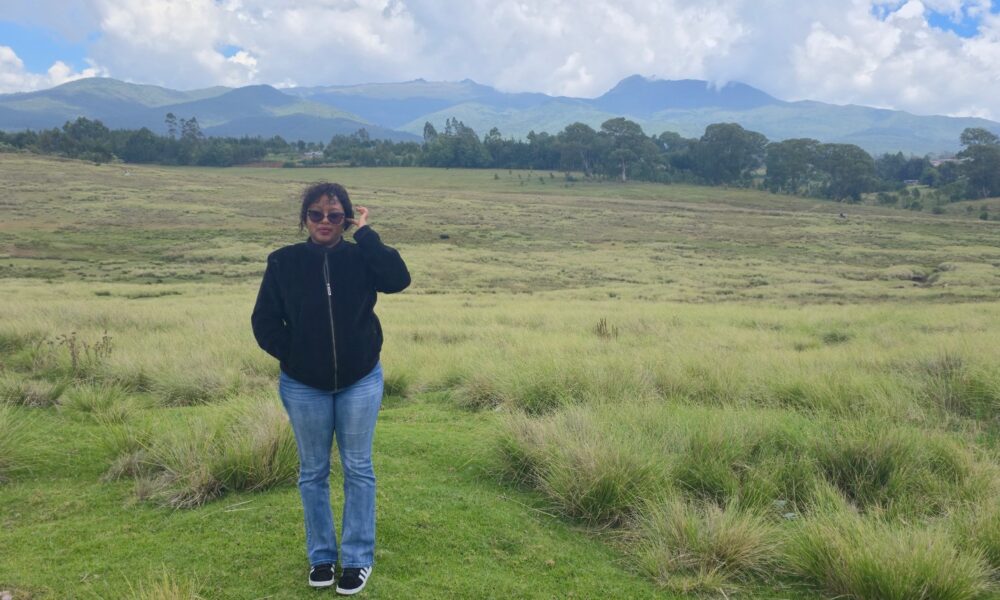
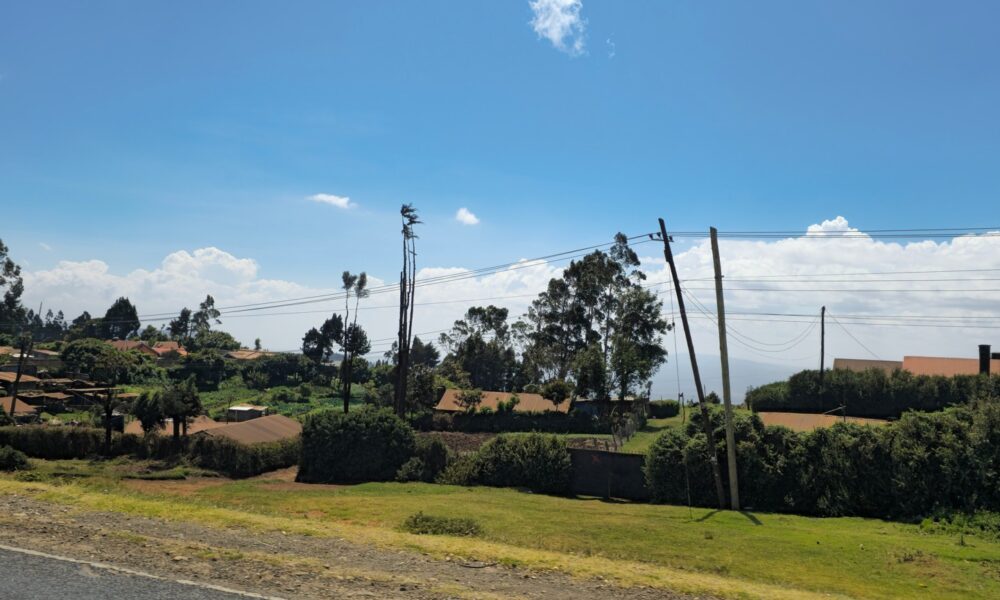
Past Njabini, we joined the Gatura Route, making our way toward Kinamba. Somewhere before reaching the Naivasha junction, we couldn’t resist pulling over. A vast grass field opened up to our right, offering a wide-angle view of Njabini town and the rugged Aberdare range and forested valleys looming in the background.
The wind up there was wild, the kind that snatches your cap if you’re not careful. True to form (or at least on both occasions I’ve passed through this area), a thick cloud hung low overhead. We snapped a few photos, took a deep breath of that crisp highland air, and then rolled on, watching the Aberdare range slowly fade in the rearview mirror.
 Njabini town on the far left


The Crown Jewel: Rift Valley Viewpoints
From there, we made a beeline for the iconic Rift Valley Viewpoint, cruising along the Nakuru-Nairobi Highway. The road carried us past a handful of small towns (Flyover, Kimende, and others), while treating us to a moving gallery of forests near and far.
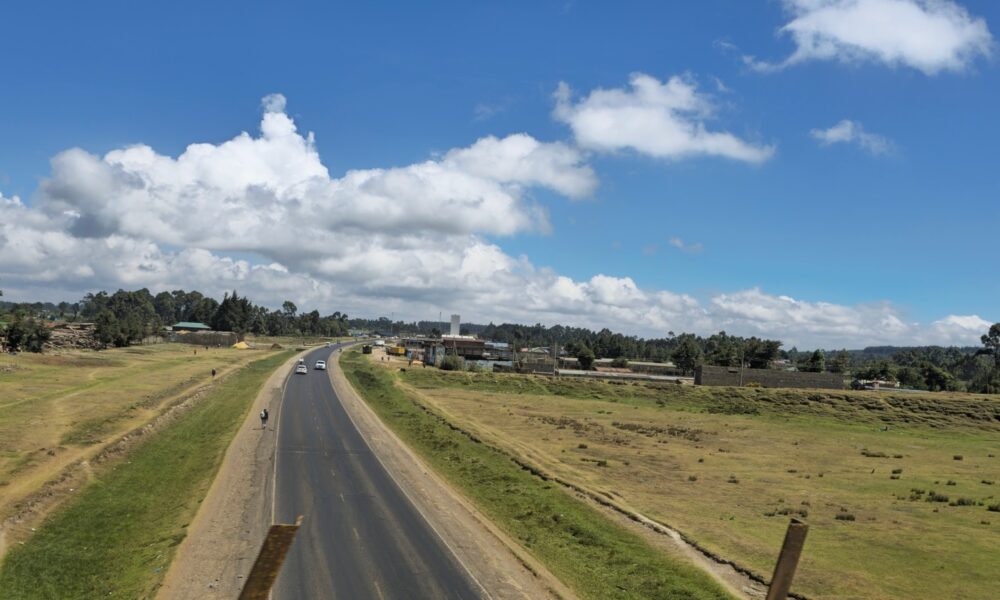
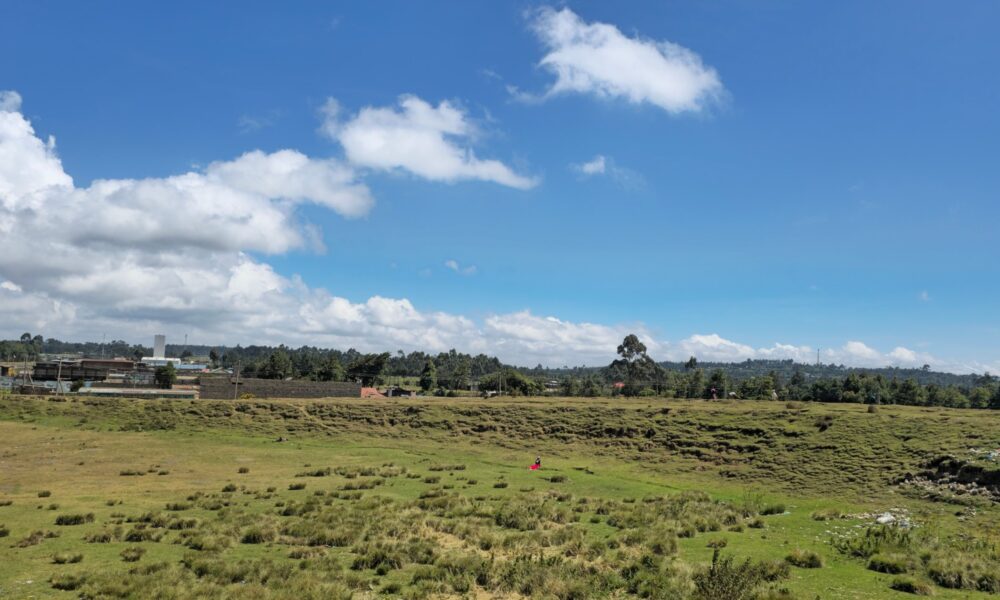
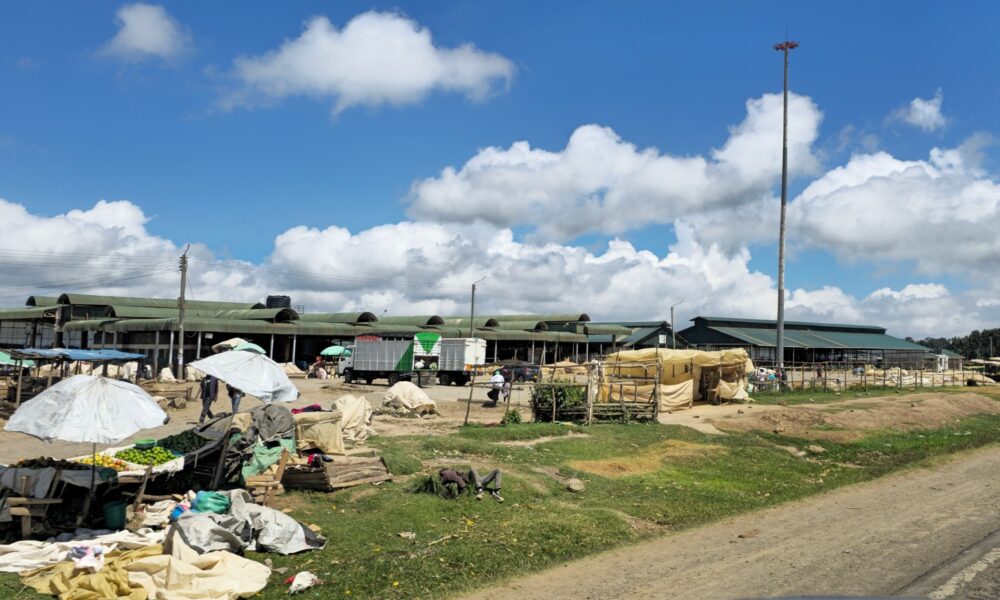


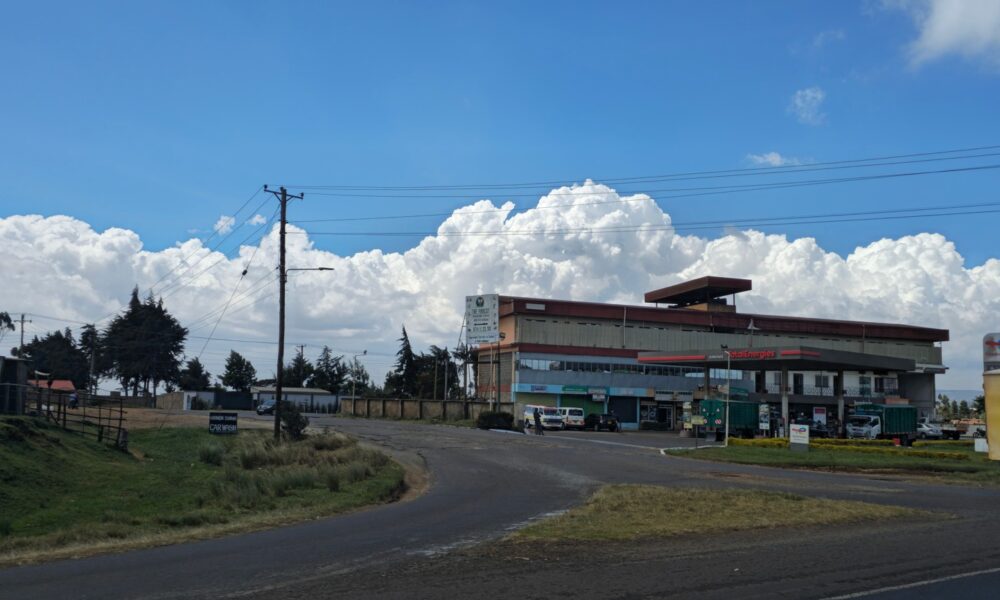
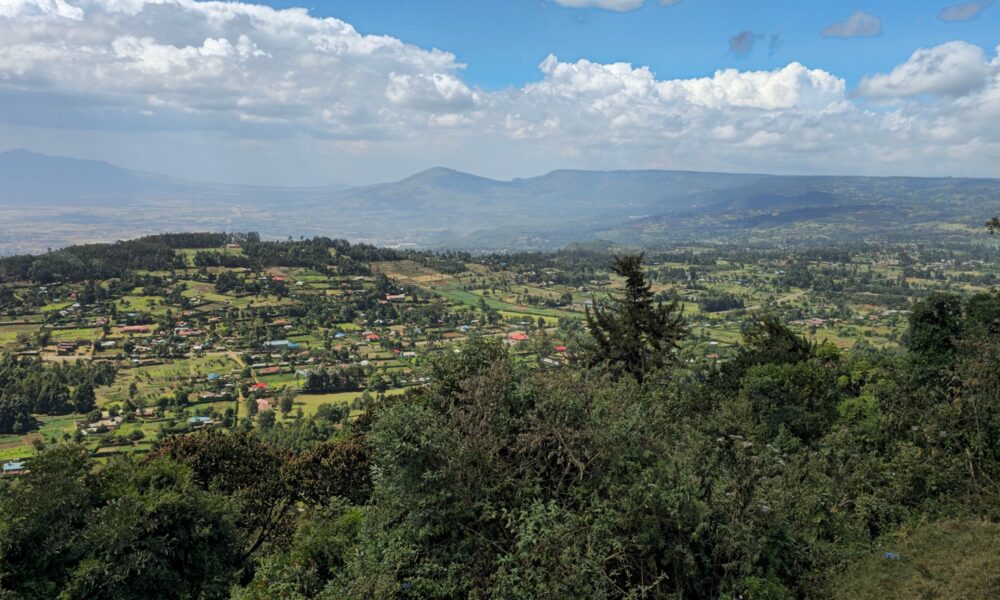
There are about three viewpoints in Lari, each offering its own unique slice of the Rift Valley. Honestly, it’s a photographer’s dream. The very first one teased us with a glimpse of Kijabe town tucked far off to the left.


As we moved on, other viewpoints opened up into full-blown panoramas. From up here, the Rift Valley spreads out below like a giant’s playground, with Lari looking like a toy village. Off in the distance stands the unmistakable silhouette of Mt. Longonot, while the Maai Mahiu-Naivasha road curls and stretches through the scene like a gift ribbon.


Of course, we couldn’t leave without grabbing a couple of souvenirs, specifically two hats from a roadside vendor (support local businesses, people!).

Between the wind in our hair, the cool mountain air, and those jaw-dropping backdrops, the photos we took here came out picture-perfect. Like seriously, you couldn’t take a bad shot if you tried.
The Green Goodbye: Tea Fields of Kiambu
From the viewpoints, we drove through Limuru town. For those who haven’t had the pleasure of visiting the very town that’s home to Bata Shoe Company, here are a few photos for you.


We followed a route that winds past Karirana and Camellia Gardens, with clear views of neatly arranged, bountiful, and well-maintained tea plantations rolling across the hills like a green quilt. It’s hard not to fall in love with this part of Kiambu, and I made sure to capture the entire ride on video.
Our route took us through Kiambu town, then onto a detour through Kirigiti, Tatu City, and Ruiru, before finally merging onto the Thika Super Highway. From there, it was a smooth, golden-hour ride back home to Nyeri, windows occasionally down, hearts full, and memories still fresh.
Back Home
We pulled back into Nyeri town by 6 p.m., a little tired but completely content. Better said, that was 302 km or 9 hours of pure joy, a day packed with mountains, forested valleys, bamboo hills, wildlife, waterfalls, forest roads, panoramic views of the Rift Valley, modern development, and tea plantations, all in one day.
Now, if you’re even slightly considering this route, do it. Remember to pack some snacks, a high-capacity power bank, carry extra cash for park fees and lunch, and perhaps load your playlist ahead of time (no network in the park, remember?).
FAQs
1. Is the Aberdare route suitable for small cars?
Yes, most of the route is manageable even with a front or rear-wheel-drive vehicle. Just be cautious on the earth road near Ndunyu Njeru.
2. How much is the Aberdare National Park entrance fee?
We paid Ksh 1,500 for the vehicle and Ksh 2,400 for three adults. The prices may vary for non-residents or larger groups.
3. Are the Rift Valley Viewpoints free to access?
Yes! There’s no entry fee. Just park your car safely and enjoy the views. Local vendors may sell souvenirs like hats, though.
4. Can you see wildlife inside Aberdare during the drive?
Absolutely. We saw elands and signs of elephants and buffalo. Keep your camera ready; you never know what you’ll spot.
5. What should I carry for this road trip?
Essentials include snacks, drinking water, extra cash, a full tank, a working camera, and maybe even a portable charger. Also, brace for network blackouts in the park.

Ezekiel Maina is the brains behind ContentGenics, where he pairs creativity and strategy to craft B2B and B2C content that real people love to read. He has written for brands like House Digest, iFoundries, Harmony Home Medical, Postaga, and BeamJobs, and covered topics like home improvement, real estate, freelancing, digital marketing, career growth, food & travel, automotive, durable medical equipment (DME), and Cannabis. By day, he’s crafting content, catching up with clients from his home office, lost in a good book, or occasionally chasing nature and greenery in another county. By late evening, he’s typically deep in a documentary rabbit hole on Netflix or YouTube.
Discover more from ContentGenics
Subscribe to get the latest posts sent to your email.
Comments are closed